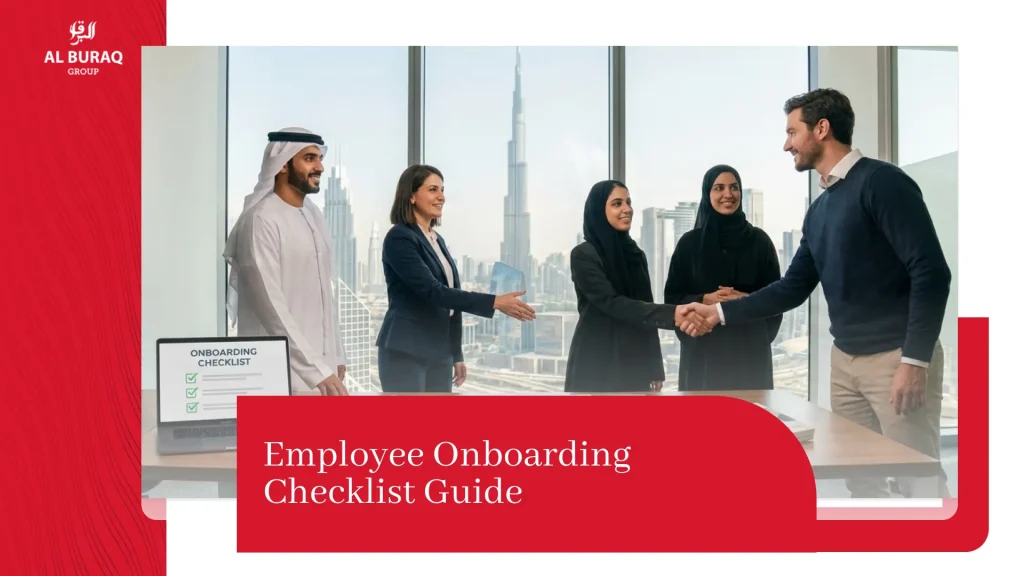
The excitement level is high when you start a new job. However, it is not an easy journey. Because the UAE follows strict legal requirements. Cultural distinctions also play a big role. Having a clear onboarding checklist is the key for employers. It assures that the new hires feel supported and fully comply with the labor law.
Companies create a smooth transition when a planned employee onboarding checklist is in place. It also builds engagement and sets the tone for success.
If you’re welcoming a fresh graduate in the UAE, you need the right process. This ensures you hit the ground running.
The guide walks you through:
- The steps of the onboarding checklist for new hires
- Explaining why each step matters, and
- Sharing some best practices for creating a welcoming experience.
Define an Onboarding Checklist and its Role:
A structured guide that employers use to integrate new hires into their organization is called an onboarding checklist. The employers must be compliant with labour laws and immigration regulations. It covers both legal requirements, such as:
- Preparing offer letters
- Employment contracts
- Visa processing
- Emirates ID registration, and
- Medical fitness tests
It also involves steps like orientation, induction, IT setup, and assigning mentors.
The Role of an Onboarding Checklist:
An onboarding checklist role goes beyond paperwork. It helps employers in meeting legal compliance. It means every stage of hiring in the UAE must meet MOHRE standards. The checklist streamlines processes by reducing errors and missed requirements during employee setup.
An onboarding checklist is a powerful weapon that boosts overall worker experience. A smooth first impression builds trust. It offers new hire comfort and faster adaptation to the company culture and values. The checklist is a way to enhance productivity. When onboarding is structured, it enables employees to understand their roles. They can effectively understand policies and company culture. A well-crafted checklist supports employee retention. Workers who feel welcomed and supported from day one are more likely to stay engaged and committed.
Simply put, an onboarding checklist acts as a compliance tool for employers and a support framework for new hires. It ensures legal obligations are met while setting employees up for success.
Why an Onboarding Checklist Matters in the UAE
Onboarding isn’t just about paperwork. Done right, it’s about giving employees clarity, confidence, and connection with their new workplace. In the UAE, it’s even more important because of:
- Strict labor regulations – Compliance is non-negotiable, and missing a step can cause legal complications.
- Cultural diversity – Many employees relocate from different parts of the world, so onboarding helps them adapt faster.
- Employee engagement – Research shows that structured onboarding increases employee retention and performance.
In short: a detailed onboarding checklist saves time, avoids compliance risks, and makes new hires feel valued from the start.
The Employee Onboarding Checklist in the UAE
To help you, we have broken down a worker onboarding checklist that every company should include.
Employment Contract and Offer Letter:
The onboarding journey starts with an official offer letter. The letter is followed by a legally binding employment contract. The contract should comply with the UAE labor law. It must include details such as:
- Job role
- Working hours
- Salary
- Leave entitlements, and
- Other benefits.
To avoid misunderstandings, be sure the contract is clear and transparent.
Residence Visa and Work Permit:
Workers can’t work in the UAE legally without these documents. Employers act as sponsors and are responsible for initiating the process. The employees need documents like:
- Passport copies
- Medical test results, and
- Passport-sized photos.
The employers should make the process smooth. This way, their employees settle quickly.
Medical Examination:
Employees must undergo a medical test. It is part of visa processing. This typically includes a chest X-ray and blood tests. Confirms that employees meet UAE health standards. To avoid delays, employers should guide new hires through this process.
Emirates ID Application:
Workers must apply for their Emirates ID card upon residence visa approval. It is essential for banking, healthcare, and government services. Companies should assist with the application process. This makes the process hassle-free.
Labor Contract Registration:
The signed employment contract must be registered with the MOHRE. The job contract provides legal protection for the employer and the employee. Contract delays or registration errors can lead to penalties.
Orientation and Induction:
New workers need to feel welcomed, paperwork aside. They must be offered a structured orientation program. It should include an introduction to the company culture, policies, and values. Newly hired must be introduced to the overall team. This creates a sense of belonging. A walkthrough of systems, tools, and expectations is also expected. Assign a mentor to make the first few weeks less intimidating.
Probationary Period:
Probation can last three to six months as per the UAE labor law. However, conditions must be clearly stated in the contract. Companies should provide constructive feedback during this period to their new hires. The guide is based on employee performance.
Ongoing Support and Engagement:
Onboarding doesn’t end after the first week. Continuous support is a way to long-term success. As an employer, follow regular check-ins and performance reviews. Consider professional development and training opportunities for your fresh workers. Wellness programs and employee engagement initiatives must also be in place. In short, the goal is to make employees feel supported and motivated. They should feel aligned with the company’s vision.
Practices for a Smooth Onboarding Experience:
Following the best practices for a seamless onboarding experience is important. It is of the same importance as finding the right candidates for your organization. For this, you can use digital tools. These tools automate paperwork and documentation to save time.
You can also personalize the process to make it more manageable. Do so by adjusting the checklist for local hires and international employees relocating to the UAE. When hiring, focusing on culture has its significance. Start emphasizing team bonding and company values beyond compliance. As an employer, try to incorporate clear communication throughout the process. Share timelines, processes, and expectations early on with the candidates. It gives you an extra edge to stay ahead of the curve and be proactive before the time arrives!
Wrapping Up!
A detailed onboarding checklist is ticking the required boxes. It creates a positive first impression in the minds of new hires. The impression sets workers up for success. Contracts and visas are at the top of the onboarding checklist. Don’t forget about orientation and ongoing engagement. Thus, every step plays a role in building loyalty and productivity.
Companies can create a smooth experience for their new hires. They need to follow the employee onboarding checklist. The checklist must be aligned with the UAE laws. Employers may foster a healthy and thriving workplace if they’re well-prepared with an onboarding checklist. A great first day leads to a great long-term relationship.
Al-Buraq is your partner if you need assistance with the onboarding checklist in the UAE. We’re here to help you every step of the way, from searching for ideal candidates through our HR services to preparing an onboarding checklist.
FAQs
What is an employee onboarding checklist?
An employee onboarding checklist is a structured guide used by employers to ensure a smooth and compliant transition for new hires. In the UAE, it includes both legal and operational steps such as issuing offer letters, signing employment contracts, processing work permits and residence visas, completing medical fitness tests, and registering Emirates ID. Beyond compliance, the checklist also covers orientation, system access, training, and cultural integration, helping new employees feel welcomed, informed, and productive from day one.
What are the 5 C’s of onboarding?
The 5 C’s of onboarding represent the key elements of an effective onboarding process:
- Compliance – Ensuring all legal requirements, labor laws, and company policies are followed.
- Clarification – Clearly defining job roles, responsibilities, and performance expectations.
- Culture – Introducing company values, workplace norms, and team dynamics.
- Connection – Building relationships with managers, colleagues, and mentors.
- Confidence – Empowering employees with the tools, knowledge, and support needed to succeed.
Together, these elements help new hires adapt faster and feel engaged within the organization.
What are the 5 pillars of onboarding?
The five pillars of onboarding form the foundation of a successful employee integration process:
- Legal and Compliance Setup – Contracts, visas, MOHRE registration, and documentation.
- Orientation and Induction – Introducing company policies, structure, and workflows.
- Role-Specific Training – Providing the skills and knowledge needed for the job.
- Cultural Integration – Helping employees understand company values and workplace culture.
- Ongoing Support and Feedback – Regular check-ins, performance reviews, and development opportunities.
These pillars ensure employees are legally compliant, well-prepared, and fully engaged for long-term success.
What happens if an employer does not follow the onboarding checklist requirements in the UAE?
Failing to follow the proper onboarding checklist in the UAE can lead to serious consequences for employers. Missing steps such as MOHRE contract registration, visa processing, or Emirates ID application may result in fines, legal penalties, or work permit suspension. In some cases, businesses may face delays in employee activation or restrictions on future hiring. Beyond legal risks, poor onboarding can negatively impact employee trust, engagement, and retention. A structured onboarding checklist ensures compliance with UAE labor laws while protecting both employers and employees.
How long does the employee onboarding process typically take in the UAE?
The onboarding process in the UAE generally takes 2 to 4 weeks, depending on visa processing timelines and document readiness. Steps such as medical fitness tests, Emirates ID registration, and labor contract approval can vary based on government processing times. For employees already residing in the UAE, onboarding may be faster. Employers who prepare documents in advance and use digital HR systems can significantly reduce delays and ensure a smoother onboarding experience.